
Too Close for Comfort: Following Too Closely
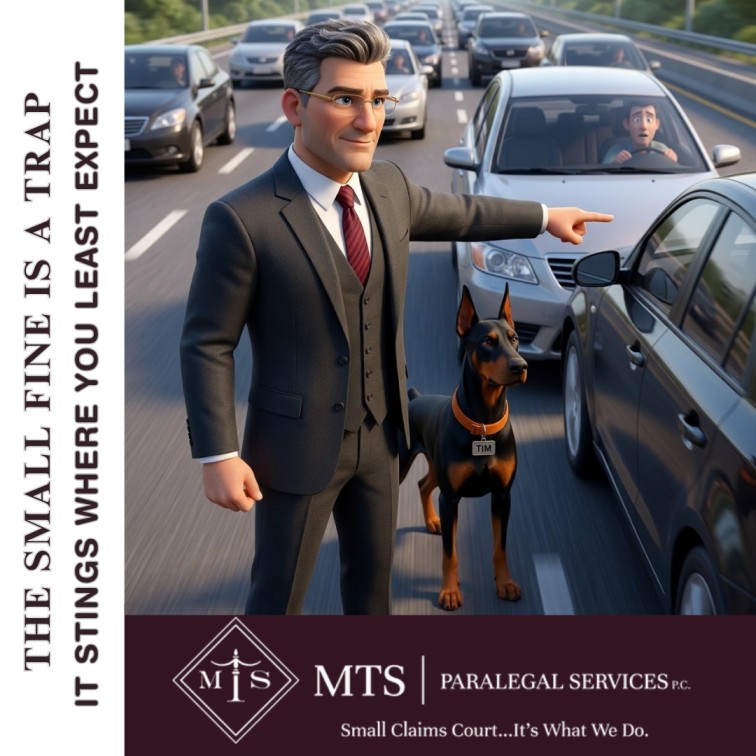
At first glance, a following too closely ticket looks like small change. The fine printed on it is modest compared to the eye-watering numbers attached to charges like stunt driving or no insurance. That modest fine is exactly what lulls drivers into simply paying it and moving on. It is a costly misread. Behind that small dollar figure sit four demerit points and an insurance classification that can quietly cost a driver far more than the ticket ever suggested. This is a charge that stings where drivers least expect it.
MTS Paralegal Services P.C. defends drivers against traffic charges across Kitchener, Waterloo, Cambridge, Guelph, Hamilton, and Southwestern Ontario. Here is why following too closely deserves far more attention than its fine implies.
What the Law Actually Requires
Following too closely is charged under section 158 of the Highway Traffic Act. The wording is deliberately open-ended: a driver must not follow another vehicle more closely than is reasonable and prudent, having due regard for the speed of the vehicles, the traffic, and the conditions of the highway. Notably, the law does not set a fixed distance for ordinary vehicles. What counts as a safe gap shifts with speed, weather, visibility, road surface, and how the surrounding traffic is behaving.
Because the standard is contextual, a common guideline drivers are taught is the two-second rule, which suggests keeping at least a two-second gap behind the vehicle ahead and increasing it substantially in rain, snow, or poor visibility. Commercial vehicles face a stricter and more specific requirement, generally needing to keep at least 60 metres of distance when travelling above 60 kilometres per hour, subject to certain exceptions. This blend of a vague general rule and a precise commercial rule is part of what makes the charge more complicated, and more defensible, than most drivers assume.
Small Fine, Big Consequences
The penalty structure is where the deception lies. The fine itself is relatively modest, often set around a little over one hundred dollars when resolved out of court, and it rises with the victim fine surcharge and court costs. On its own, that figure encourages drivers to shrug and pay. The real weight of the charge sits elsewhere. A conviction for following too closely adds four demerit points to the driver’s record, which is a substantial hit for a single ticket.
Those demerit points carry consequences well beyond the number itself. A fully licensed driver who accumulates too many demerit points faces escalating warnings and, at higher thresholds, the risk of licence suspension. For novice drivers holding a G1, G2, M1, or M2 licence, the stakes are far higher, because a conviction carrying four or more demerit points can trigger Ontario’s escalating sanctions program and lead to an immediate licence suspension, as covered in the firm’s discussion of novice driver rules. A charge that looked trivial can, for a new driver, become the first rung on a ladder that ends in cancellation.
The Insurance Sting and the Collision Problem
The insurance consequences are where following too closely truly earns its reputation. Insurers treat this conviction as a high-risk indicator, and a single ticket can push premiums upward for three years or more. Measured across those years, the increase routinely dwarfs the original fine many times over. The driver who paid the ticket to avoid the hassle often ends up paying far more in premiums than any court appearance would have cost.
There is a further complication that makes this charge particularly damaging. Following too closely is frequently laid after a rear-end collision, because the driver who strikes the vehicle ahead is presumed to have been too close. When that happens, the insurance impact can be a double hit, with one increase for the at-fault collision and another for the conviction itself. And where an accident is involved, the situation can escalate beyond following too closely into a careless driving charge under section 130 of the Highway Traffic Act, which carries even steeper penalties and a heavier insurance consequence. What began as a minor tailgating ticket can grow into something far more serious.
Why This Charge Is So Defensible
The same vagueness that makes following too closely easy to charge also makes it genuinely defensible. Because the offence turns on what was reasonable and prudent in the circumstances, the charge rests heavily on the officer’s opinion and interpretation of the moment. That opinion can be examined and challenged. What was the speed, the weather, the visibility, the road surface, and the behaviour of the other vehicles? Did another driver cut in and create the short gap? Was the following distance actually unsafe given everything happening around it?
These are precisely the questions that a proper defence explores, and they frequently reveal that the charge is not as clear-cut as the ticket suggests. Timothy Ellis of MTS Paralegal Services P.C. has spent over two decades examining exactly these details in traffic matters across Southwestern Ontario, scrutinizing the evidence and the circumstances to build the strongest possible response. Given the four demerit points and the insurance fallout at stake, contesting the charge is almost always worth serious consideration. Anyone holding a following too closely ticket can reach the firm through the contact page at mtsparalegalservices.com before paying anything.
The fine is small on purpose. What comes after it is not. Fight the ticket.
Small Claims Court… It’s What We Do.
This content does not constitute legal advice. For up-to-date guidance or legal advice specific to your situation, please contact MTS Paralegal Services Professional Corporation or call (226) 444-4882.