
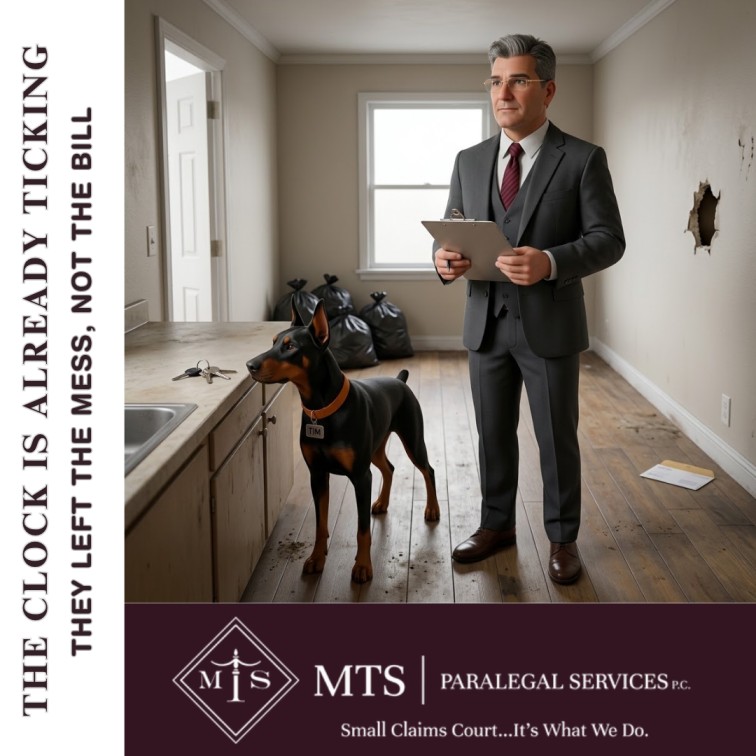
The Tenant Moved Out and Left the Mess
The keys are back, but the unit tells a story the landlord did not want to read. Holes in the walls, unpaid rent, a hydro bill left in arrears, and a pile of garbage where a clean unit should be. When a tenant moves out and leaves the mess behind, many landlords assume the money is gone with them. It is not. Ontario law gives landlords a specific and powerful tool to pursue a former tenant, but it comes with a strict deadline that catches unprepared landlords off guard every single year.
MTS Paralegal Services P.C. represents landlords and tenants before the Landlord and Tenant Board across Kitchener, Waterloo, Cambridge, Guelph, Hamilton, and Southwestern Ontario. Here is how a landlord recovers what a departed tenant left owing.
The L10 Application: The Landlord’s Key Tool
When a tenant has moved out still owing money, the primary route to recovery is the Form L10, the Application to Collect Money a Former Tenant Owes, filed with the Landlord and Tenant Board. This application allows a landlord to pursue a former tenant for unpaid rent, compensation, unpaid utilities the tenant was responsible for, and the cost of repairing damage the tenant caused, all without starting a separate court action. It is the mechanism specifically designed for the after-the-tenancy situation.
There are two threshold conditions every landlord needs to know. First, the L10 can only be used where the tenant moved out on or after September 1, 2021, the date this route became available. Second, and most important, the application must be filed within one year of the date the tenant moved out. That one year clock is unforgiving. A landlord who lets it expire generally loses the ability to use this streamlined LTB route entirely. An experienced licensed paralegal makes sure the application is filed correctly and well within the window.
Where the L10 Ends and Small Claims Court Begins
Timing does more than set a deadline. It determines which forum has authority over the claim in the first place. While the tenant moved out within the past year, the Landlord and Tenant Board generally holds jurisdiction over these monetary claims through the L10 process. A landlord who tries to skip the Board and head straight to Small Claims Court during that first year may find the claim dismissed and be redirected back to the L10.
Once the one year window closes, the picture changes. At that point, Small Claims Court generally becomes the appropriate forum for pursuing the outstanding debt, subject to the usual two year limitation period under the Limitations Act, 2002. Both the Landlord and Tenant Board and Small Claims Court can order amounts up to $50,000 following the October 2025 increase, so the monetary ceiling is the same in either forum. What differs is the timing and the procedure, and choosing the wrong path costs a landlord time they may not have. Getting the forum right from the start is exactly the kind of judgment that protects a claim.
Damage Versus Normal Wear and Tear
Not every imperfection in a vacated unit is chargeable to the tenant, and this is where many landlord claims run into trouble. Ontario law draws a firm line between undue damage, which a tenant is responsible for, and normal wear and tear, which a landlord is not entitled to recover. Faded paint, minor carpet wear from ordinary use, and the routine aging of fixtures are the landlord’s cost of doing business. A tenant cannot be charged to make a unit newer than it was when they moved in.
Undue damage is different. Holes punched in walls, broken fixtures, pet damage beyond normal use, and garbage or belongings left behind that must be removed at a cost are all potentially recoverable. The key for a landlord is to separate the two carefully and to claim only what is genuinely tenant-caused and provable. A claim padded with wear and tear items invites scrutiny and can undermine the credibility of the entire application. It is also worth remembering that a landlord cannot simply keep the last month rent deposit to cover damage, because that deposit can only ever be applied to the final month of rent.
Evidence Wins the Claim
An L10 application, like any claim, succeeds on the strength of its documentation, and the most powerful evidence in a damage case is visual and comparative. Move-in and move-out inspection records that show the condition of the unit at the start and end of the tenancy are invaluable. Dated photographs and videos of the damage, invoices and receipts for repairs and cleaning, records of unpaid rent and utilities, and the full trail of communications with the tenant all build the case.
For any amount claimed, the landlord should be able to show the actual cost or a reasonable estimate, and should connect each item clearly to the tenant’s conduct rather than to age or ordinary use. Utility claims should show the agreement, the bill, and the tenant’s share. Damage claims should pair each item with its cost and its cause. This is meticulous work, and it is precisely where organized preparation separates a claim that gets paid from one that gets whittled down at the hearing. The Board does not collect the money either, so once an order is obtained, enforcement steps such as garnishment or a writ may be needed to actually recover it.
Do Not Let the Deadline Close on Your Claim
A tenant who left owing money and damage behind is not beyond reach, but the window to act the easy way does not stay open. The one year L10 deadline, the jurisdictional line between the Board and Small Claims Court, the wear and tear distinction, and the evidence requirements all shape whether a landlord recovers or writes off the loss. Moving quickly and correctly is everything. Timothy Ellis of MTS Paralegal Services P.C. has spent over two decades helping landlords across Southwestern Ontario recover what departed tenants left owing, and helping tenants respond where a claim is inflated or unfounded.
Any landlord dealing with a former tenant’s unpaid debts or damage can reach the firm through the contact page at mtsparalegalservices.com before the clock runs out.
The tenant left the mess. They do not get to leave the bill behind too.
Small Claims Court… It’s What We Do.
This content does not constitute legal advice. For up-to-date guidance or legal advice specific to your situation, please contact MTS Paralegal Services Professional Corporation or call (226) 444-4882.