
The N5 Notice: What It Really Means
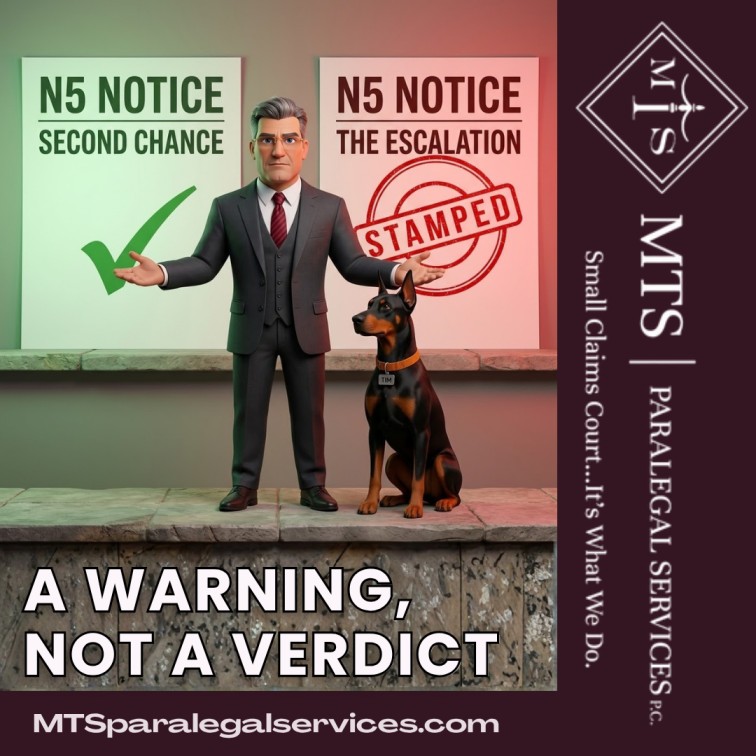
Few pieces of paper cause more confusion between landlords and tenants than the N5 notice. A tenant who receives one often assumes eviction is imminent, while a landlord who serves one sometimes believes the tenant is already on their way out. Both are usually wrong. The N5 is a formal notice with a very specific purpose, and understanding what it actually means is the difference between handling it well and making a costly mistake. For a first N5, it is not an ending at all. It is a warning with a built-in second chance.
MTS Paralegal Services P.C. represents both landlords and tenants before the Landlord and Tenant Board across Kitchener, Waterloo, Cambridge, Guelph, Hamilton, and Southwestern Ontario. Here is what the N5 really means for both sides.
What the N5 Is For
The N5, formally the Notice to End your Tenancy For Interfering with Others, Damage or Overcrowding, is one of the eviction notices created under the Residential Tenancies Act, 2006. Unlike the N4, which deals with unpaid rent, the N5 addresses tenant conduct. It covers three distinct grounds, and a landlord must identify which one applies on the form itself.
The first ground is substantial interference with the reasonable enjoyment of the property by other tenants or the landlord. The second is wilful or negligent damage to the rental unit or the residential complex. The third is overcrowding, meaning more people living in the unit than health, safety, or housing standards permit. Each ground has a specific meaning, and the notice must clearly describe the exact conduct being complained of. A vague N5 that fails to spell out what the tenant did and when gives the tenant strong grounds to challenge it, which is one of the most common reasons these notices fail.
The Bar Is Higher Than Tenants and Landlords Think
A recurring misconception is that any irritation between neighbours justifies an N5. The Residential Tenancies Act, 2006 requires that interference be substantial, not merely annoying or inconvenient. Normal living sounds, such as footsteps, voices at reasonable volumes during reasonable hours, or children playing, do not amount to substantial interference even when a neighbour finds them bothersome. Substantial interference generally involves conduct that seriously affects others, such as repeated late-night parties, threatening behaviour, or persistent noise that prevents normal use of a home.
The damage ground carries its own threshold. A tenant is responsible for undue damage caused wilfully or negligently, not for the ordinary deterioration that comes from living in a unit. Normal wear and tear is never a valid basis for an N5, and whether something crosses from wear into undue damage depends on the item’s age, its previous condition, and how it was used. Understanding where these lines fall is exactly the kind of assessment an experienced licensed paralegal provides before a landlord serves a notice or a tenant responds to one.
The Seven Day Window That Changes Everything
Here is the feature of the N5 that most people do not fully grasp, and the one that matters most. A first N5 is a voidable notice. When a landlord serves a first N5, the termination date on it must be at least 20 days after the notice is given, and the tenant is given seven days to correct the problem. If the tenant fixes the issue within those seven days, the notice is voided and the tenancy simply continues as though it was never served.
What correcting the problem looks like depends on the ground. For interference, it means stopping the behaviour. For damage, it means repairing the damage, paying the reasonable cost of the repair or replacement, or making arrangements satisfactory to the landlord. For overcrowding, it means reducing the number of occupants. This built-in second chance is the whole point of a first N5. It is designed to give the tenancy a path to survive if the tenant takes the notice seriously and acts quickly. A tenant who ignores that window, however, loses the protection it offers.
When a Second N5 Changes the Rules
The forgiving nature of a first N5 does not last forever. If a landlord serves a second N5 on the same tenant within six months of a first N5, the rules shift significantly. A qualifying second N5 is generally not voidable, meaning the tenant does not get another seven day window to correct the problem. Instead, the termination date on a second N5 is set at least 14 days after the notice, and the tenant cannot cancel it simply by fixing the issue.
This escalation is deliberate. The law extends patience the first time, but a repeated pattern of the same kind of problem within a short window removes the automatic second chance. For landlords, this makes accurate record-keeping and proper service of the first N5 essential, because a defective first notice can undermine the ability to rely on a second. For tenants, it means a first N5 should never be brushed aside, because the consequences of a second one are far more serious. If the problem is not resolved and the tenant does not leave, the landlord may file an L2 application with the Landlord and Tenant Board for an eviction order, which leads to a hearing where both sides present their case.
Handle the N5 the Right Way, Whichever Side You Are On
An N5 is a legal process with real consequences and real opportunities, and how it is handled in the early days often determines the outcome. For a landlord, a notice that is vague, served improperly, or built on conduct that does not meet the legal threshold can be dismissed after months of waiting. For a tenant, ignoring a first N5 can turn a fixable situation into an eviction hearing. Getting it right matters enormously on both sides of the door. Only the Court Enforcement Office can carry out an eviction, and a landlord can never remove a tenant personally regardless of the notice served.
Timothy Ellis of MTS Paralegal Services P.C. has spent over two decades representing both landlords and tenants in Landlord and Tenant Board matters across Southwestern Ontario. Anyone serving or receiving an N5 can reach the firm through the contact page at mtsparalegalservices.com before taking the next step.
A first N5 is a warning, not a verdict. Treat it like one.
Small Claims Court… It’s What We Do.
This content does not constitute legal advice. For up-to-date guidance or legal advice specific to your situation, please contact MTS Paralegal Services Professional Corporation or call (226) 444-4882.