
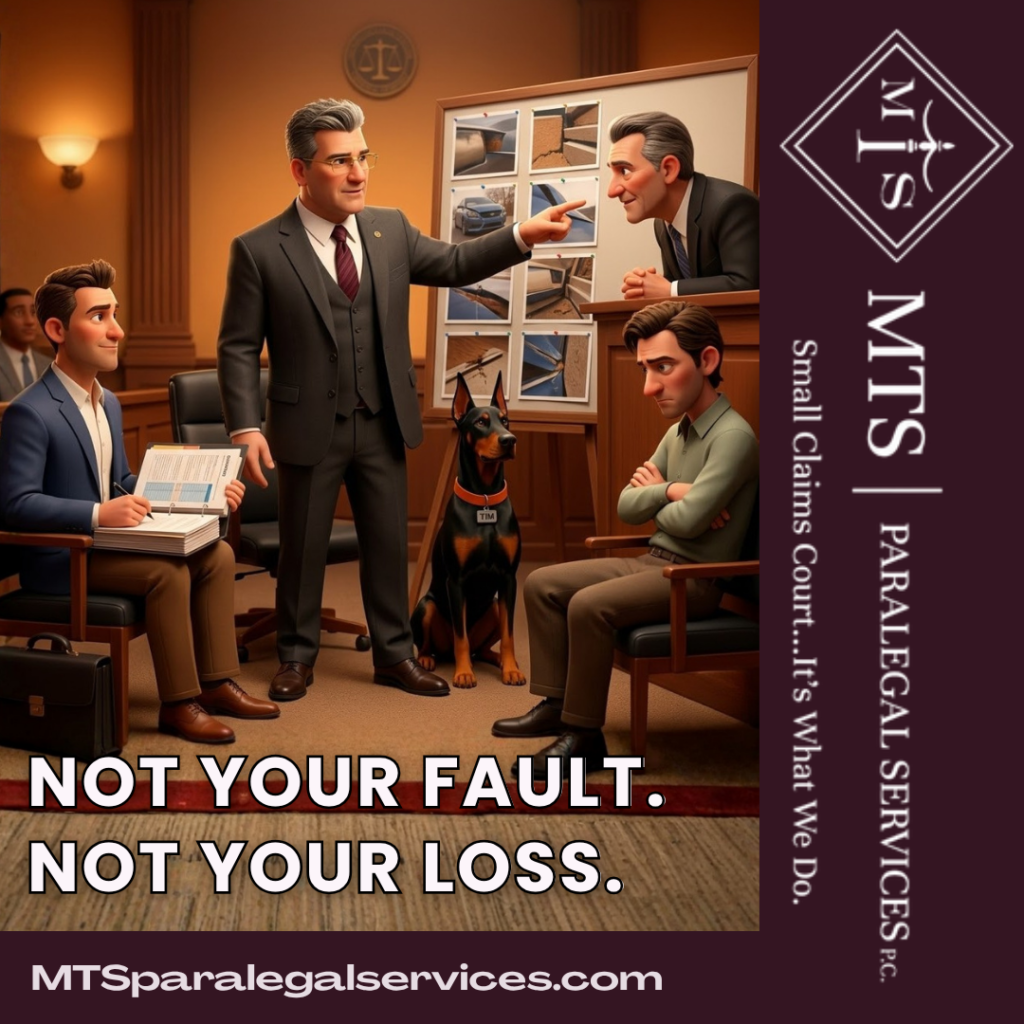
Suing for Property Damage in Ontario Small Claims Court
Property gets damaged every day in Ontario. Vehicles get hit in parking lots. Rental units get left in disrepair by tenants. Contractors cause damage to homes they were hired to fix. Neighbours allow trees to fall onto fences. In every one of these situations, the person who suffered the loss has a right to pursue compensation, and Ontario Small Claims Court is often the most accessible and practical forum to do it.
As of October 1, 2025, Ontario Small Claims Court can handle property damage claims up to $50,000, excluding interest and costs. This expanded jurisdiction means that a significantly broader range of property damage disputes can now be resolved in a faster, less expensive forum than the Superior Court of Justice.
What Types of Property Damage Claims Qualify?
Ontario Small Claims Court handles any claim for payment of money or recovery of personal property where the amount claimed does not exceed $50,000, excluding interest and costs. Property damage claims that fall within this limit are well suited to the Small Claims forum, which was designed to provide everyday Ontarians with an accessible path to compensation without the procedural complexity of higher court litigation.
Common property damage claims brought before Small Claims Court include damage to vehicles, damage to rental units caused by tenants or landlords, destruction of personal property, damage caused by contractors during renovation or repair work, and damage to business equipment or assets. Ontario law also allows claims to be brought under the Parental Responsibility Act, 2000 against the parent of a child under 18 years of age where that child intentionally takes, damages, or destroys property. This is a less commonly known but important avenue in situations involving minors.
Establishing Liability: Who Is Legally Responsible?
Before the value of a property damage claim can be assessed, liability must be established. This means demonstrating that the defendant owed the claimant a legal duty, that the duty was breached, and that the breach directly caused the damage suffered. In most property damage cases, liability is grounded in negligence, breach of contract, or trespass, depending on the nature of the relationship between the parties and how the damage occurred.
In a negligence claim, the claimant must show that the defendant failed to meet the standard of care that a reasonable person would have exercised in the same circumstances. In a contract-based claim, such as a dispute with a contractor who damaged property while performing work, the claimant must establish what was agreed upon and how the defendant’s conduct fell short of those obligations. Where liability is genuinely contested, the quality and organization of the evidence presented at the Small Claims Court hearing is often the deciding factor.
Calculating and Proving the Value of Your Loss
Establishing the dollar value of a property damage claim requires more than a general estimate. Courts expect claimants to support their claimed amount with concrete, verifiable evidence of what the damage cost or will cost to repair or replace. The most persuasive evidence in a property damage claim typically includes photographs of the damage taken as soon as possible after the incident, written repair estimates from qualified tradespeople or businesses, actual invoices and receipts for completed repairs, and an independent assessment of the damaged item’s value before and after the incident where relevant.
Where the damaged property cannot be economically repaired, the claimant may seek the fair market value of the item at the time of the loss rather than the replacement cost of a new equivalent. The difference between repair cost and fair market value is an important distinction that courts apply carefully, particularly in vehicle damage claims. Supporting the claimed amount with independent estimates from at least two qualified sources strengthens the credibility of the claim considerably and reduces the risk of the court awarding a lesser amount.
The Duty to Mitigate and Its Impact on Your Claim
Ontario law imposes a duty on every claimant to take reasonable steps to minimize their losses following a property damage incident. A claimant who allows damage to worsen through inaction, or who incurs unreasonable repair costs when cheaper alternatives were available, may find their damages reduced at trial to reflect only what would have been recoverable had they acted reasonably. This principle applies regardless of how clear the other party’s liability may be.
Practical steps that demonstrate mitigation include obtaining repairs promptly, seeking competitive estimates rather than accepting the first and most expensive option, and documenting every step taken to address the damage and contain further loss. A defendant who can show that the claimant failed to mitigate has a meaningful argument for reducing the amount of the award. Having experienced representation involved early helps ensure that the claimant’s conduct throughout the process supports rather than undermines the strength of the claim.
Build the Right Case from the Start
Property damage claims live and die on the quality of their evidence. A claimant who gathers photographs immediately, obtains written repair estimates promptly, keeps all invoices and receipts organized, and sends a formal demand letter before filing is in a significantly stronger position than one who waits, relies on memory, or arrives at a Small Claims Court hearing without supporting documentation. The two-year limitation period under the Limitations Act, 2002 also applies, meaning the claim must generally be filed within two years of the date the damage occurred or was discovered.
Timothy Ellis of MTS Paralegal Services P.C. has been representing clients in property damage and Small Claims Court matters across Kitchener, Waterloo, Cambridge, Guelph, Hamilton, and Southwestern Ontario for over 20 years. From the initial assessment of the claim through to enforcement of any judgment obtained, the firm provides experienced, practical guidance at every stage of the process. Reach out through the contact page or call (226) 444-4882 before the deadline passes.
Your property has value. Protect it.
Small Claims Court… It’s What We Do.
This content does not constitute legal advice. For up-to-date guidance or legal advice specific to your situation, please contact MTS Paralegal Services Professional Corporation or call (226) 444-4882.