
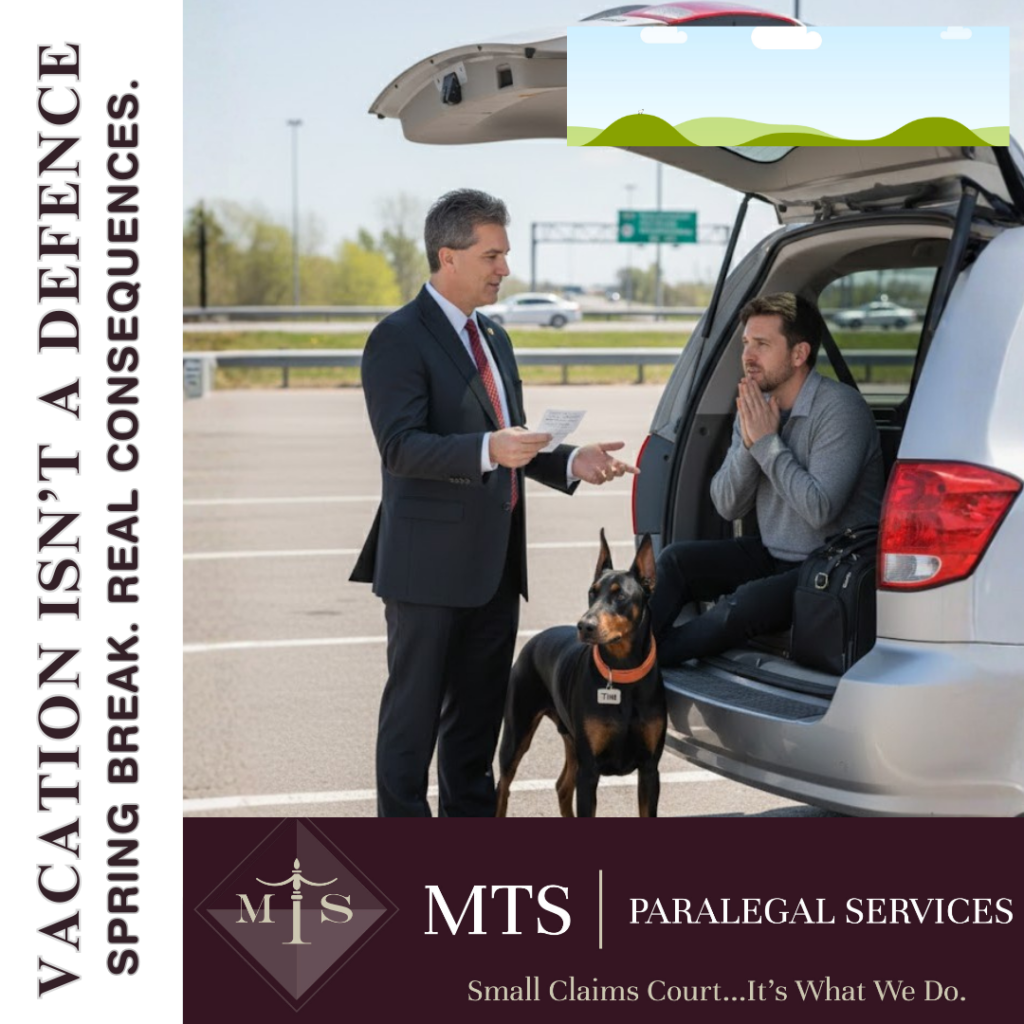
Spring Break Travel Tickets: What Drivers Need to Know
Spring Break is often associated with family travel, road trips across Ontario, and increased vehicular traffic on highways leading to popular destinations. During this period, enforcement initiatives intensify, and roadside scrutiny becomes more prevalent. Drivers frequently underestimate the legal implications of travel-related infractions, particularly when unfamiliar routes, congested highways, and time pressures converge. It is in this context that MTS Paralegal Services Professional Corporation, a professional paralegal firm in Ontario, routinely assists motorists who encounter unexpected Provincial Offences while travelling.
The rise in Spring Break travel tickets is neither coincidental nor arbitrary. Law enforcement agencies across Ontario frequently implement targeted traffic campaigns aimed at promoting road safety during high-volume travel periods. Understanding the legal landscape is essential for any driver intending to travel during Spring Break.
Heightened Enforcement During Spring Break
Spring Break travel significantly increases traffic volume on major corridors such as Highway 401, the QEW, and regional roadways leading to cottage country and border crossings. With increased traffic comes heightened enforcement. Police services often focus on speeding, careless driving, stunt driving, distracted driving, and impaired operation offences.
Drivers may not appreciate that even minor speeding infractions can result in demerit points, substantial fines, and insurance implications. More serious allegations, such as stunt driving under section 172 of the Highway Traffic Act, can lead to immediate roadside licence suspension and vehicle impoundment. During Spring Break, officers are particularly vigilant regarding excessive speed, aggressive lane changes, and the use of handheld devices.
Careless driving charges are especially significant. A conviction can result in six demerit points, significant fines, and potential licence suspension. Moreover, the reputational and financial consequences can extend well beyond the holiday period. Travel enthusiasm does not mitigate statutory liability.
Common Travel-Related Offences
Several offences are frequently observed during Spring Break travel:
- Speeding and excessive speed
- Distracted driving involving mobile devices
- Improper lane changes or following too closely
- Failure to produce insurance or vehicle permit documentation
- Seatbelt violations involving passengers
Many motorists assume that minor infractions will resolve without long-term consequence. However, convictions may trigger insurance premium increases, which often exceed the original fine amount. For commercial drivers or those who require a clean record for employment, even a single conviction can have professional repercussions.
Out-of-province drivers travelling within Ontario must also comply with Ontario legislation. Ignorance of provincial statutes does not constitute a defence. Reciprocal enforcement agreements may permit demerit points or convictions to follow drivers back to their home jurisdiction.
Cross-Border and Inter-Provincial Considerations
Spring Break frequently involves cross-border travel to the United States or inter-provincial road trips. Drivers should be aware that convictions for certain offences can complicate border crossings. While minor traffic infractions may not automatically render an individual inadmissible, more serious offences involving impaired driving or criminal charges can have lasting immigration consequences.
In addition, unpaid fines or outstanding warrants related to traffic matters can result in licence suspension within Ontario. A suspended licence during travel may lead to further charges if the individual continues to operate a motor vehicle.
Tim at MTS routinely advises clients that early legal review is critical. Filing a timely Notice of Intention to Appear and reviewing disclosure are foundational steps in assessing available defences. Procedural deficiencies, evidentiary issues, and Charter considerations may arise in certain cases. Each matter requires individual analysis grounded in statutory interpretation and case law.
Legal Rights and Strategic Response
Upon receiving a Provincial Offence Notice, a driver has options. Payment of the fine constitutes a guilty plea and results in a conviction. Electing to challenge the charge provides an opportunity to review disclosure, assess officer notes, and determine whether the Crown can meet its evidentiary burden beyond a reasonable doubt.
Drivers should be mindful of limitation periods for filing responses. Failure to act within prescribed timelines can result in default conviction. During busy travel seasons, administrative oversight is common, yet the consequences remain significant.
MTS Paralegal Services Professional Corporation provides representation in traffic court matters throughout Ontario. The firm’s focus on Provincial Offences, including Highway Traffic Act charges, allows for strategic evaluation of defences and negotiation where appropriate. Information regarding services is available at https://mtsparalegalservices.com/.
Legal analysis may involve scrutiny of radar or lidar calibration records, officer training, roadway signage compliance, and the factual matrix surrounding the stop. A structured and evidence-based approach is essential. Tim at MTS emphasizes that proactive engagement often yields more favourable outcomes than reactive measures taken after conviction.
Drive Smart Connect with MTS
Spring Break should conclude with positive memories rather than unresolved legal matters. Traffic charges carry financial, licensing, and insurance implications that can extend well beyond the holiday period. Prompt legal assessment is advisable where significant penalties, demerit points, or licence suspension are at issue.
MTS Paralegal Services Professional Corporation, based in Ontario, provides focused representation in traffic court and Provincial Offences matters. Individuals who receive Spring Break travel tickets are encouraged to seek informed guidance tailored to the specific circumstances of the charge. To obtain professional assistance grounded in Ontario traffic law, contact Tim at MTS.
Small Claims Court, it’s what we do.
This content does not constitute legal advice. For up-to-date guidance or legal advice specific to your situation, please contact MTS Paralegal Services Professional Corporation or call (226) 444-4882.