Managing Tenant Complaints About Maintenance and Safety
Tenant complaints respecting maintenance and safety are among the most frequent sources of dispute within Ontario’s residential tenancies regime. Landlords are subject to clear statutory obligations under the Residential Tenancies Act, 2006 to maintain rental units and residential complexes in a good state of repair and fit for habitation. Where maintenance concerns are left unaddressed, disputes may escalate to formal proceedings before the Landlord and Tenant Board. In this legal landscape, property owners and tenants alike often seek structured guidance from firms such as MTS Paralegal Services Professional Corporation, an Ontario professional paralegal firm dedicated to landlord and tenant advocacy.
Statutory Maintenance Obligations in Ontario
Under Ontario law, landlords must comply with maintenance standards that exist independently of any contractual terms in a lease agreement. Even where a tenancy agreement purports to shift responsibility onto a tenant, statutory obligations generally prevail. Maintenance and safety standards encompass structural integrity, plumbing, heating, ventilation, electrical systems, and compliance with applicable health and fire codes.
The duty to maintain is ongoing. It is not contingent upon the amount of rent paid or the duration of the tenancy. Failure to meet these obligations may expose a landlord to rent abatements, repair orders, administrative fines, or, in serious cases, termination of the tenancy. Tenants, conversely, are expected to maintain ordinary cleanliness and refrain from wilful or negligent damage. Distinguishing between legitimate maintenance concerns and tenant-caused damage is often central to the resolution of complaints.
Receiving and Assessing Tenant Complaints
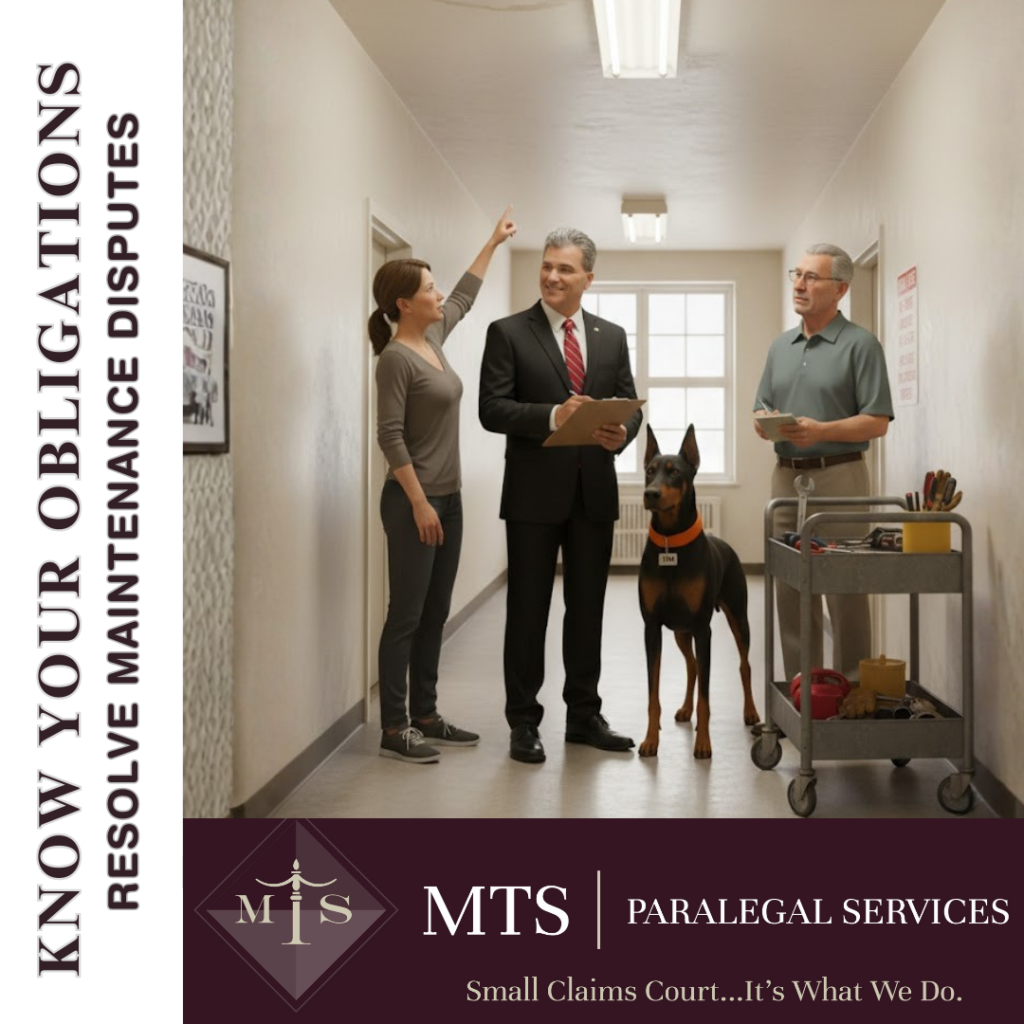
Effective management of tenant complaints begins with prompt documentation and objective assessment. Written complaints should be acknowledged in a timely manner. Detailed records, including dates, descriptions of the issue, photographs, and contractor reports, form an evidentiary foundation should the matter proceed to adjudication.
Landlords must assess whether the complaint pertains to an urgent safety issue, such as lack of heat, water infiltration, electrical hazards, or mould concerns. Urgent issues require immediate attention. Non-urgent matters should nevertheless be addressed within a reasonable timeframe. Reasonableness is evaluated contextually, having regard to the nature of the repair, availability of materials, and health implications.
Where disputes arise as to whether the issue constitutes a breach of maintenance obligations, professional legal analysis becomes essential. MTS Paralegal Services Professional Corporation routinely addresses such disputes by reviewing documentation, assessing statutory duties, and advising on procedural compliance before the Landlord and Tenant Board.
Safety Concerns and Regulatory Compliance
Maintenance complaints frequently intersect with safety regulations. Fire code compliance, carbon monoxide detectors, smoke alarms, and safe egress requirements are not merely best practices; they are mandatory. Municipal property standards by-laws may also impose specific obligations concerning waste management, pest control, and structural safety.
Failure to comply with safety standards may expose landlords to municipal enforcement proceedings in addition to tenant applications. Tenants may file applications alleging that a landlord has substantially interfered with reasonable enjoyment or failed to meet maintenance standards. In serious cases, safety breaches can result in orders for significant remedial work or financial compensation.
Risk mitigation requires proactive inspections and regular preventative maintenance. Clear communication with tenants regarding scheduled repairs and access requirements reduces misunderstanding and potential allegations of neglect. Where tenants deny access for legitimate repairs, landlords must follow statutory notice provisions to preserve compliance.
Dispute Resolution Before the Landlord and Tenant Board
When informal resolution fails, maintenance and safety disputes are typically adjudicated before the Landlord and Tenant Board. Tenants may file applications seeking repair orders, rent abatements, or authorization to complete repairs and deduct costs. Landlords may respond by presenting evidence of compliance, reasonable efforts to repair, or tenant obstruction.
Preparation is critical. Documentary evidence, contractor invoices, correspondence, inspection reports, and witness testimony may influence the adjudicator’s findings. Procedural errors, including improper notice or insufficient documentation, can adversely affect outcomes.
Tim at MTS Paralegal Services possesses experience in representing landlords and tenants in maintenance-related proceedings. Through detailed case analysis and strategic advocacy, Tim at MTS assists clients in presenting coherent evidence aligned with statutory requirements. The objective is not merely to respond to allegations but to ensure procedural integrity and legal compliance throughout the process.
Connect with MTS
Managing tenant complaints about maintenance and safety requires careful navigation of statutory duties, evidentiary standards, and regulatory compliance. Unresolved complaints can escalate rapidly, affecting rental income, property value, and legal exposure. Early legal guidance often mitigates risk and clarifies obligations before disputes intensify.
Tim at MTS Paralegal Services Professional Corporation provides representation and advisory services grounded in Ontario’s residential tenancy framework. Property owners and tenants seeking structured, legally informed assistance may contact Tim at MTS.
Small Claims Court, it’s what we do.
This content does not constitute legal advice. For up-to-date guidance or legal advice specific to your situation, please contact MTS Paralegal Services Professional Corporation or call (226) 444-4882.