
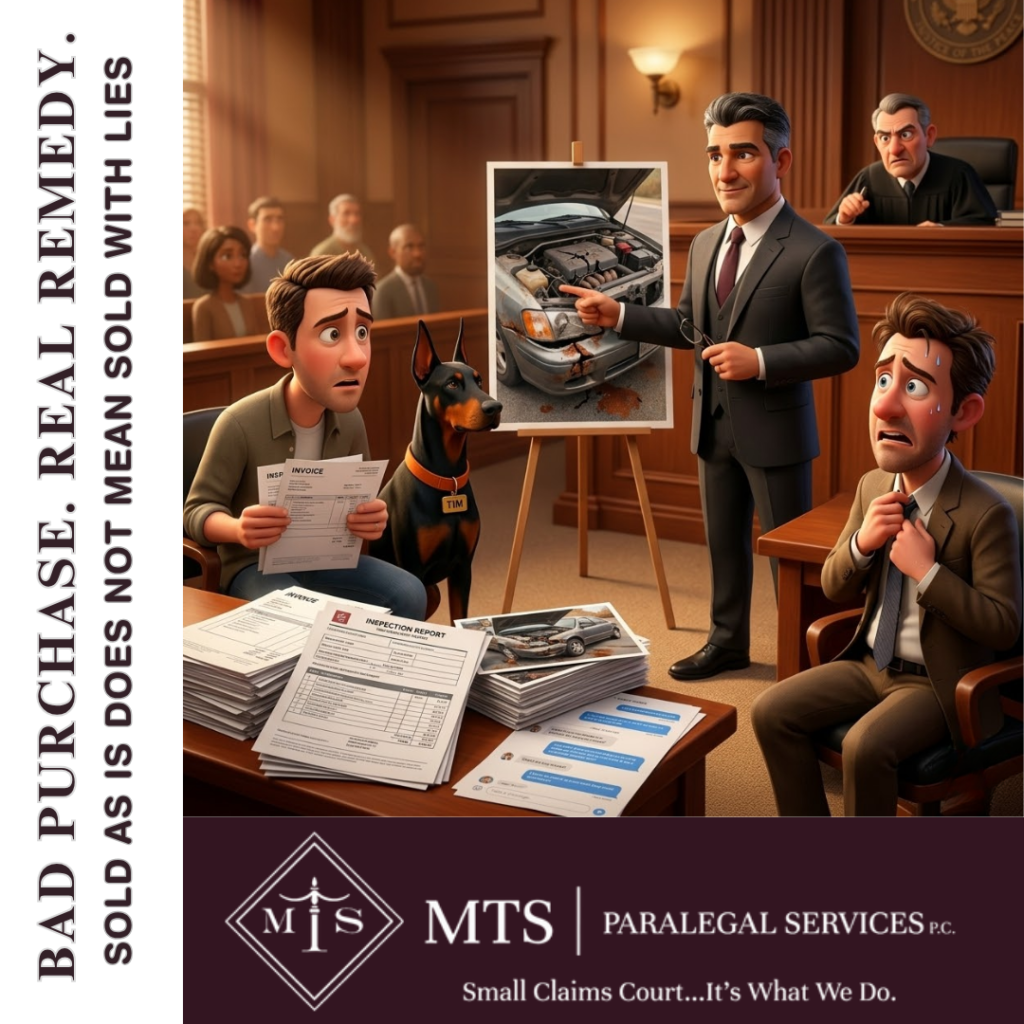
Suing for a Bad Used Car Purchase in Ontario Small Claims Court
Buying a used car is one of the more significant purchases most Ontarians make, and when that purchase turns out to be a costly mistake, the frustration is real and the financial impact can be serious. Whether the vehicle broke down days after leaving the lot, the dealer failed to disclose known defects, or the transaction involved outright misrepresentation, Ontario law provides avenues for buyers to pursue compensation. Small Claims Court is often the most practical and accessible path to recovering those losses.
Understanding the legal framework that governs used car purchases in Ontario, and knowing what it takes to build a successful claim, is the starting point for any buyer considering legal action.
Dealer Sale vs. Private Sale: Why the Distinction Matters
Not all used car purchases are treated equally under Ontario law, and the distinction between buying from a registered dealer and buying from a private seller is significant. Purchases from a licensed dealership are governed by the Motor Vehicle Dealers Act and overseen by the Ontario Motor Vehicle Industry Council, which regulates dealer conduct and provides a complaint mechanism for buyers who feel they have been treated unfairly. Dealers are subject to specific disclosure obligations, mandatory warranty requirements, and consumer protection standards that private sellers are not.
A private sale, on the other hand, is typically conducted on an as-is basis, meaning the buyer accepts the vehicle in its current condition with no implied warranty from the seller. This does not mean a private seller is immune from legal action. If a private seller knowingly misrepresented the condition of the vehicle, concealed a known defect, or made false statements that the buyer relied upon when making the purchase, a claim may still be viable before Ontario Small Claims Court. The legal threshold is simply different depending on the nature of the transaction.
What Laws Protect Used Car Buyers in Ontario?
Ontario buyers who purchased from a registered dealership benefit from several layers of legal protection. The Consumer Protection Act, 2002 prohibits unfair practices, including false, misleading, or deceptive representations made by a seller about the quality, condition, or history of a vehicle. The Sale of Goods Act also contains implied warranty provisions that can apply to dealer transactions, including an implied condition that goods sold are of merchantable quality.
OMVIC requires registered dealers to provide a mandatory warranty on certain components of a used vehicle. This warranty generally covers specified mechanical components for 30 days or 1,500 kilometres, whichever comes first, on eligible vehicles. Dealers who fail to honour this warranty or who engage in deceptive practices may face regulatory complaints through OMVIC in addition to civil claims in Small Claims Court. Filing a complaint with Consumer Protection Ontario before commencing litigation is also an available step that can sometimes produce a faster resolution without the need for a formal court proceeding.
Common Grounds for Suing Over a Used Car Purchase in Ontario
There are several recognized bases on which a buyer may bring a claim against a dealer or private seller in Ontario. Misrepresentation is among the most common. This occurs when the seller made specific false statements about the vehicle’s condition, history, or specifications, and the buyer relied on those statements when deciding to purchase. Common examples include failing to disclose a prior accident, concealing mechanical defects, misrepresenting odometer readings, or claiming a vehicle passed an inspection when known issues existed at the time of sale.
Breach of warranty is another recognized ground, particularly in dealer transactions where the mandatory OMVIC warranty applies or where an express warranty was provided at the time of sale. Hidden fees added to the final purchase price without disclosure, delivery of a vehicle that does not match the agreed specifications, and financing terms that were altered after the sale are additional circumstances that may support a Small Claims Court claim. Ontario’s two-year limitation period under the Limitations Act, 2002 applies, meaning a claim must generally be filed within two years of the date the buyer knew or ought to have known that the problem existed.
What Evidence Do You Need to Build a Strong Claim?
The strength of a used car claim in Ontario Small Claims Court comes down to documentation. A buyer who can clearly demonstrate what was represented at the time of sale, what the actual condition of the vehicle was, and what losses were suffered as a result is in a considerably stronger position than one who relies on memory alone. Relevant evidence includes the bill of sale, any written warranty provided by the dealer, all communications between the buyer and seller, repair estimates or invoices from independent mechanics, inspection reports, and records of any complaints made to the dealer following the purchase.
An independent mechanic’s assessment of the vehicle’s condition and a written opinion connecting the defects to the time of the original sale can be particularly persuasive. Where the claim involves a dealer, documentation of any complaints filed with OMVIC or Consumer Protection Ontario adds additional weight to the buyer’s position. Sending a formal demand letter before filing a claim is also advisable, as it demonstrates that reasonable attempts were made to resolve the matter and creates a further paper trail supporting the claim.
Do Not Drive Away From What You Are Owed
A bad used car purchase does not have to result in a loss that the buyer simply absorbs. Ontario law provides meaningful remedies for buyers who were misled, and Small Claims Court is equipped to hear claims up to $50,000, which covers the vast majority of used vehicle disputes. Having experienced licensed paralegal representation ensures the claim is properly prepared, that all relevant legal grounds are identified, and that the evidence is organized and presented effectively.
Timothy Ellis of MTS Paralegal Services P.C. has been representing clients in Small Claims Court matters across Kitchener, Waterloo, Cambridge, Guelph, Hamilton, and Southwestern Ontario for over 20 years. Whether the matter involves a dealership or a private sale, the firm provides honest case assessments and experienced advocacy at every stage of the process. Reach out through the contact page or call (226) 444-4882 before the limitation period runs out.
You paid for a vehicle that works. If it does not, that is not your problem to absorb alone.
Small Claims Court… It’s What We Do.
This content does not constitute legal advice. For up-to-date guidance or legal advice specific to your situation, please contact MTS Paralegal Services Professional Corporation or call (226) 444-4882.