
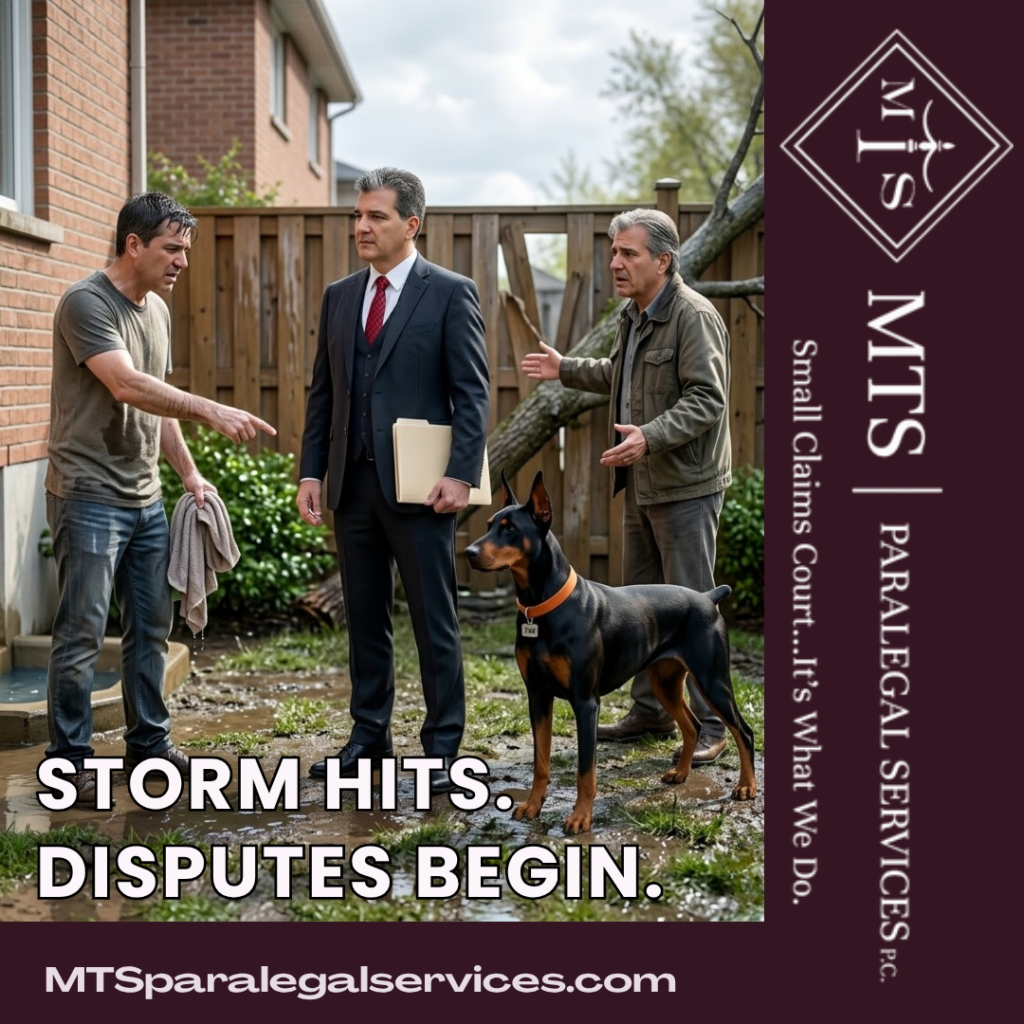
Suing Over Spring Storm Damage: Landlord and Tenant Obligations
Spring in Ontario frequently brings significant weather fluctuations, including heavy rainfall, high winds, flooding, and rapid thaw conditions. These seasonal changes often expose weaknesses in residential properties, resulting in property damage that may lead to legal disputes between landlords and tenants. During this period, firms such as MTS Paralegal Services Professional Corporation regularly observe an increase in claims relating to maintenance obligations, negligence, and financial responsibility for storm-related losses.
Understanding how liability is determined following spring storm damage requires careful consideration of Ontario’s statutory framework, particularly the Residential Tenancies Act, 2006, as well as general principles of negligence and contractual responsibility.
Legal Responsibilities of Landlords After Storm Damage
Ontario law establishes clear obligations for landlords regarding property maintenance and repair. Section 20 of the Residential Tenancies Act, 2006 requires landlords to maintain rental units in a good state of repair, fit for habitation, and compliant with health, safety, housing, and maintenance standards, regardless of the age or condition of the building.
Spring storms commonly result in issues such as:
- Roof leaks caused by ice damming or wind damage
- Basement flooding due to poor drainage systems
- Structural damage from fallen trees or debris
- Mould formation following water intrusion
Where storm damage reveals pre-existing maintenance failures, landlords may be held legally responsible. For example, if a landlord failed to repair known foundation cracks that later allowed water penetration during heavy rainfall, liability may extend beyond simple repairs to include compensation claims.
However, landlords are generally not responsible for unavoidable “acts of nature” where reasonable preventative maintenance was performed. Legal disputes often turn on whether the landlord acted reasonably in preparing the property for foreseeable seasonal risks.
Tenant Obligations and Liability Considerations
Tenants also have legal duties that may affect liability following storm damage. Section 33 of the Residential Tenancies Act, 2006 requires tenants to maintain ordinary cleanliness and repair any undue damage caused by wilful or negligent conduct.
Examples of potential tenant liability may include:
- Failing to report leaks promptly, resulting in worsening damage
- Improper use of fixtures leading to water overflow
- Blocking drainage areas such as balcony drains
- Neglecting to close windows during severe weather events
Tenants are also expected to promptly notify landlords of maintenance concerns. Failure to report water penetration or structural concerns within a reasonable timeframe may weaken a tenant’s claim for compensation if the damage worsens due to delay.
Insurance considerations also play an important role. While landlords typically insure the building structure, tenants are generally responsible for obtaining tenant insurance to protect personal belongings. Disputes frequently arise when tenants assume landlord insurance will cover personal property losses, which is rarely the case.
When Storm Damage Leads to Legal Claims
Spring storm damage can give rise to multiple types of legal proceedings depending on the nature of the dispute. These may include applications before the Landlord and Tenant Board or civil claims where financial damages are disputed.
Common legal claims include:
- Tenant applications for rent abatements due to loss of use
- Claims for compensation for damaged personal property
- Landlord claims for tenant-caused damage
- Disputes regarding repair timelines
- Negligence claims relating to failure to maintain property
To succeed in such claims, parties must typically demonstrate:
- A legal duty existed
- The duty was breached
- Damage resulted from the breach
- The losses were reasonably foreseeable
Documentation is critical in these disputes. Photographs, maintenance records, written communications, inspection reports, and insurance correspondence frequently form the evidentiary foundation of successful claims.
Legal representation can significantly assist in properly framing these issues, particularly where complex questions of shared liability arise.
Practical Steps Following Spring Storm Property Damage
Both landlords and tenants can reduce legal exposure by taking prompt and reasonable action after storm damage occurs.
Recommended steps include:
- Documenting damage immediately through photographs and written notes
- Reporting damage promptly in writing
- Taking reasonable steps to prevent further deterioration
- Contacting insurance providers without delay
- Keeping records of repair requests and responses
Landlords should also ensure contractors are qualified and repairs are completed within a reasonable timeframe. Delays without justification may strengthen tenant claims for compensation or abatements.
Tenants should similarly cooperate with access for repairs and mitigation efforts. Refusal to allow reasonable access may negatively impact legal claims.
Early legal guidance can also assist parties in understanding their rights before disputes escalate. MTS Paralegal Services Professional Corporation frequently assists clients in assessing whether legal remedies are appropriate and how best to proceed within Ontario’s adjudicative processes.
Connect with MTS
When spring storm damage results in uncertainty about legal obligations or financial responsibility, obtaining knowledgeable legal guidance can make a significant difference in protecting legal rights. MTS Paralegal Services Professional Corporation provides representation in landlord and tenant disputes and related civil matters.
Timothy Ellis, Paralegal, provides experienced assistance in evaluating liability, preparing claims, and representing parties in dispute resolution proceedings. Individuals facing disputes arising from seasonal property damage are encouraged to contact Tim at MTS for informed legal assistance.
Small claims court, it’s what we do.
This content does not constitute legal advice. For up-to-date guidance or legal advice specific to your situation, please contact MTS Paralegal Services Professional Corporation or call (226) 444-4882.