Spring Cleaning Your Legal Documents: What to Review
As the spring season encourages individuals and businesses to organize their physical spaces, it also presents an appropriate opportunity to review important legal documents. Periodic review of legal records is a prudent risk-management practice that can help ensure ongoing compliance with Ontario law, confirm the accuracy of contractual obligations, and prevent avoidable disputes. Many individuals only examine legal documents when a problem arises; however, proactive review, often supported by experienced professionals such as those at MTS Paralegal Services Professional Corporation, can significantly reduce legal exposure before conflicts emerge.
Why Regular Legal Document Reviews Matter
Legal documents are not static instruments. Contracts, agreements, and legal filings often require updates to reflect changing circumstances such as new employment arrangements, property transactions, evolving business relationships, or regulatory amendments. A failure to maintain current documentation may result in unenforceable terms, misunderstandings between parties, or financial loss.
Under Ontario legal principles, contracts depend upon certainty of terms, mutual intention, and adequate consideration. If documentation no longer reflects the true agreement between parties, enforcement may become complicated. Similarly, outdated lease agreements, promissory notes, or service contracts may fail to address modern realities such as digital communications, revised payment structures, or updated statutory obligations.
Spring review of legal documents provides an opportunity to confirm that obligations remain clear, dispute resolution clauses remain enforceable, and all parties continue to understand their rights and responsibilities. This process also helps identify missing documentation, expired limitation periods, or unsigned amendments that could otherwise weaken a legal position if litigation becomes necessary.
Key Personal Legal Documents to Examine
Individuals should consider reviewing several categories of personal legal documentation during an annual legal review. These documents frequently include wills, powers of attorney, insurance policies, loan agreements, and records relating to civil disputes or outstanding claims.
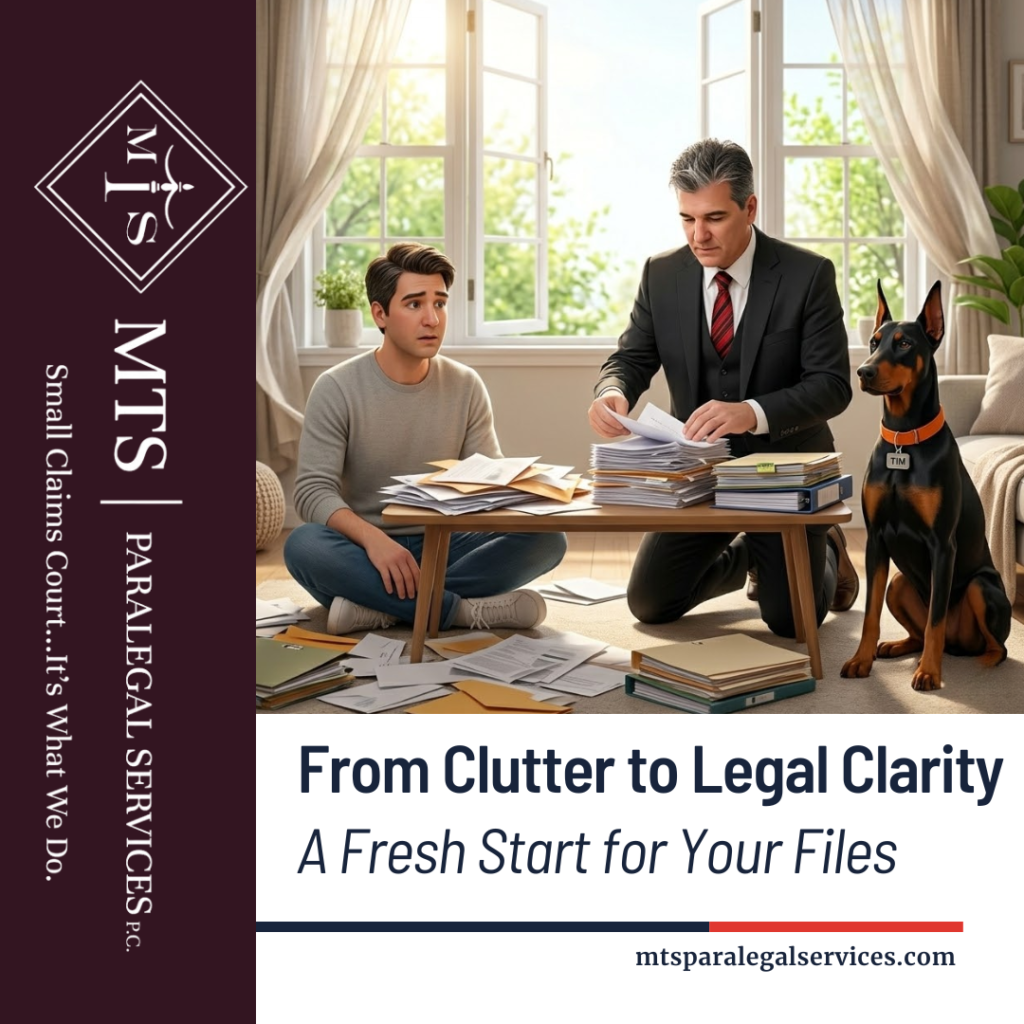
For example, changes in family circumstances such as marriage, separation, or the birth of children may necessitate revisions to estate planning documents. Similarly, individuals involved in Small Claims Court matters should confirm that pleadings, settlement discussions, and correspondence are properly documented and preserved. Maintaining organized legal records can strengthen credibility and assist in presenting a coherent case should court proceedings arise.
Documentation relating to debt repayment arrangements should also be reviewed to confirm payment schedules, interest provisions, and any negotiated settlements. Ensuring that written records correspond with actual payment activity can prevent unnecessary enforcement action or collection disputes.
Business and Contractual Records That Require Attention
Business owners should also treat spring as an opportunity to conduct a structured review of operational legal documentation. Service agreements, contractor arrangements, commercial leases, and customer terms and conditions should all be evaluated for clarity and enforceability.
Particular attention should be given to scope of work provisions, indemnity clauses, limitation of liability terms, and payment conditions. Ambiguities in these areas frequently give rise to Small Claims Court disputes in Ontario. A review may reveal inconsistencies between signed agreements and actual business practices, particularly where services have evolved over time without formal amendments.
Record retention policies also deserve attention. Businesses should confirm that invoices, correspondence, inspection reports, and performance records are stored in a manner that would support evidentiary requirements if litigation occurs. Proper documentation often becomes decisive when courts assess credibility and contractual performance.
Businesses experiencing recurring payment delays may also benefit from reviewing the wording of demand letters, default provisions, and collection procedures. Clear documentation strengthens the ability to demonstrate reasonable efforts at resolution before commencing legal proceedings.
Warning Signs That Documents May Need Updating
Certain indicators suggest that legal documents should be reviewed without delay. These may include unsigned agreements, verbal modifications not reflected in writing, inconsistent payment terms, missing schedules or appendices, or uncertainty regarding dispute resolution procedures.
Another common concern involves documents that were copied from generic templates without legal review. While templates may offer a starting point, they often fail to address Ontario-specific legal requirements or the unique circumstances of a particular transaction.
Legal disputes frequently arise not because parties intended conflict, but because documentation failed to clearly address expectations. Preventative review reduces this risk by identifying gaps before they develop into formal disagreements.
Individuals and businesses should also review documents following major events such as property renovations, contractor disputes, tenancy changes, or significant purchases. These events often generate legal relationships that deserve proper written documentation to protect all parties involved.
Connect with MTS
When legal documents require clarification or enforcement preparation, timely professional review can make a meaningful difference. Tim at MTS Paralegal Services regularly assists clients with document review, Small Claims Court preparation, and dispute resolution strategies grounded in Ontario legal practice. MTS Paralegal Services Professional Corporation operates as a professional paralegal firm dedicated to practical and effective legal support.
For those preparing to take the next step toward legal clarity and organization, contact Tim at MTS.
Small claims court, it’s what we do.
This content does not constitute legal advice. For up-to-date guidance or legal advice specific to your situation, please contact MTS Paralegal Services Professional Corporation or call (226) 444-4882.